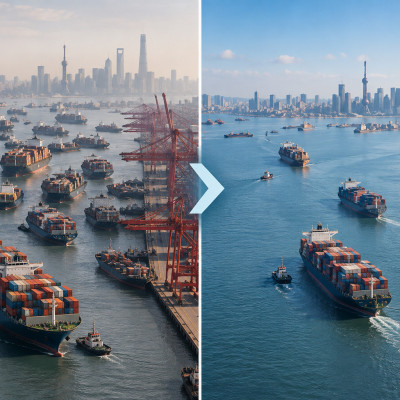
Port Congestion in Shanghai and Ningbo Begins to Ease
After weeks of heavy congestion, China’s two major container ports, Shanghai and Ningbo, are finally seeing some improvement.
According to Linerlytica data, the total container vessel capacity in and around the two ports dropped from 1.74 million TEU on September 27 to 1.17 million TEU on October 9 — a decrease of approximately 33%.
This suggests that port operations are gradually recovering after the busy pre-Golden Week shipping period.
However, the situation across Asia remains challenging. Singapore, Port Klang and Manila continue to experience congestion, which may still affect vessel schedules and transit times.
For shippers, this is a positive sign, but it is still too early to expect a full return to normal operations. Monitoring vessel schedules and allowing extra time for deliveries remains important, especially for shipments involving transshipment hubs in Southeast Asia.
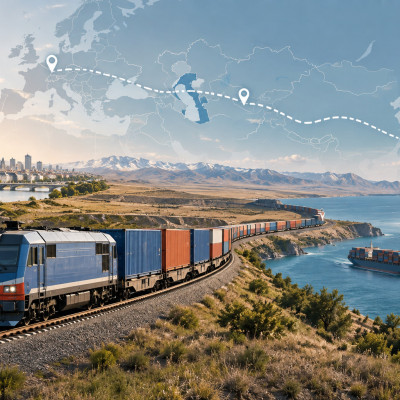
China Launches First Full Container Train on Trans-Caspian Route from Lianyungang
China has launched its first full container train from Lianyungang along the Trans-Caspian International Transport Route, strengthening another alternative overland connection between China and Europe.
The new service departed on September 10 and will travel through Kazakhstan and across the Caspian Sea, continuing westward along the Trans-Caspian corridor.
- Around 5 days faster
The new service is expected to reduce transit time by approximately five days, making the route more competitive for cargo moving between China and European markets.
- Another alternative for China–Europe logistics
The Trans-Caspian route, also known as the Middle Corridor, is becoming increasingly important as companies look to diversify supply chains and reduce their dependence on individual transport corridors.
For logistics, the launch from Lianyungang means more routing options, shorter transit times and stronger connectivity between China, Central Asia and Europe.
The trend is clear: China continues to expand its network of alternative land and multimodal routes to global markets.
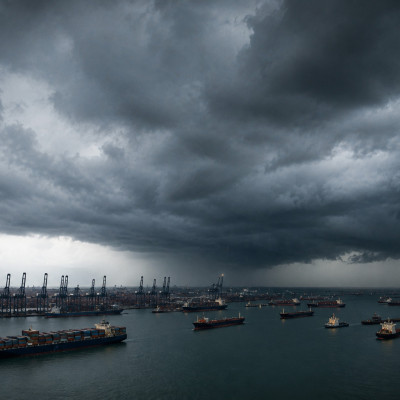
One typhoon in China is reshaping global container schedules
Port congestion in Asia is no longer just a regional problem — it is starting to affect global shipping routes, including services through the Red Sea.
According to Seatrade Maritime, storms and port delays across Asia have tied up around 2.4 million TEU of container capacity.
With vessels waiting longer at ports and schedules disrupted, available capacity in Asia is becoming tighter. As a result, some carriers are being forced to rethink vessel deployment and routing, including how they use Red Sea services.
The impact can quickly spread across the entire supply chain: a delay at a Chinese port affects the next port call, then the next voyage — and eventually container availability and delivery times thousands of kilometers away.
This is how one typhoon can turn into a global logistics problem.
For shippers, it means that even routes far from the storm may face schedule changes, longer transit times and less predictable capacity in the coming weeks.
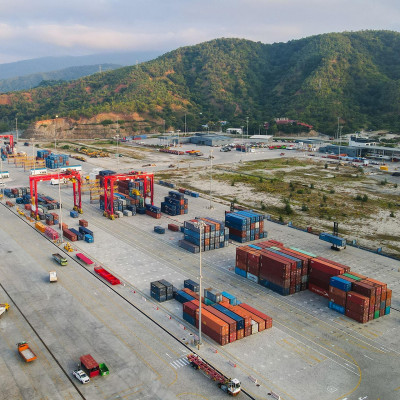
Swire Shipping Opens Dili Office to Strengthen Southeast Asia Presence
Swire Shipping has opened a new office in Dili, the capital of Timor-Leste, strengthening its direct presence in one of Southeast Asia’s emerging markets.
The new branch will be led by Darry Tan, who has spent the past two years supporting the company’s operations in the country together with its agency partner CEVA Logistics.
The move marks Swire Shipping’s transition from an agency-based model to more direct market management. Experienced team members will transfer from CEVA Logistics to the new office, ensuring operational continuity and maintaining strong customer relationships. The branch is also expected to move into its own dedicated premises soon.
Swire Shipping’s key offering in the market remains its East Timor Service, which connects Timor-Leste with global trade routes every 10 days via the company’s Singapore hub.
For a small island economy, reliable shipping frequency is essential — supporting imports, container logistics and deeper integration into regional supply chains.
The opening of the Dili office highlights the growing importance of emerging Southeast Asian markets for liner shipping. With continued trade and infrastructure development, Timor-Leste has the potential to become a more visible regional logistics hub, supported by stable connectivity through Singapore.
Following the opening of its Kuala Lumpur branch in April, Swire Shipping’s latest move reflects a broader strategy to expand its regional footprint through local teams, closer customer engagement and the development of niche services with long-term growth potential.
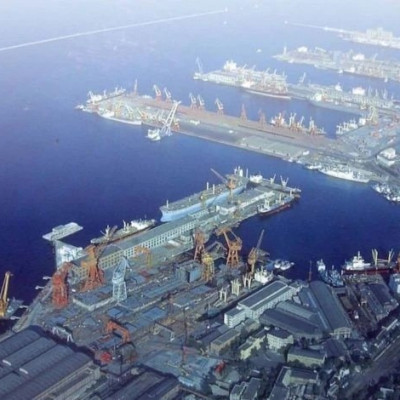
Chinese Ports Continue to Lead the Global Efficiency Ranking
Chinese terminals once again took top positions in the 2025 Container Port Performance Index, published by the World Bank and S&P Global Market Intelligence. Fuzhou ranked first, followed by Dalian, Salalah (Oman), Mawan, and Chiwan.
The index evaluates more than 400 ports worldwide based on container vessel turnaround time — from arrival at the anchorage or pilot station to departure after cargo operations are completed. With six Chinese ports in the top 16, East Asia continues to demonstrate a strong competitive edge in terminal efficiency.
One of the growing risks for the industry is so-called surge congestion. Because of weather disruptions, strikes, and geopolitical crises, vessel arrivals are becoming less evenly distributed, creating short-term pressure on berths, yards, and inland logistics infrastructure.
For container carriers, port efficiency is increasingly becoming a key factor in schedule reliability. Even a local delay at a major transshipment hub can quickly affect several trade lanes and increase the need for additional tonnage.